








Subnet Calculator
Free IPv4 and CIDR tool for instant network calculations
The story
Overview
Subnet Calculator is a free web-based utility designed for network administrators, IT professionals, and students who need to quickly calculate and understand IPv4 and IPv6 subnetting. The tool accepts an IP address and CIDR prefix, then instantly displays comprehensive network details including the network address, subnet mask, broadcast address, wildcard mask, total addresses, usable hosts, and binary representation. Users can interactively adjust the CIDR prefix using a draggable slider or arrow keys to see results update in real time. The calculator includes additional utilities such as an IP Range Calculator for reading inclusive address ranges, a Subnet Splitter for dividing networks into smaller subnets, a Subnet Merger for finding the smallest subnet containing multiple networks, and an IP Address Converter for converting between decimal, binary, hexadecimal, and CIDR formats. The platform also provides educational resources including step-by-step guides on subnetting fundamentals, CIDR notation, subnet calculation methods, and Variable Length Subnet Masking (VLSM), making it suitable for both quick calculations and learning.
Key features
Instant Network Calculations
Enter any IPv4 or IPv6 address with CIDR prefix to instantly get network address, subnet mask, broadcast, wildcard mask, and usable host range.
Interactive Visual Representation
Drag a slider or use arrow keys to adjust the CIDR prefix and watch network and host bits update in real time with visual feedback.
Binary Representation
View the complete binary breakdown of IP addresses and subnet masks in both grouped and continuous formats.
Additional Subnet Tools
Access IP Range Calculator, Subnet Splitter, Subnet Merger, and IP Address Converter for comprehensive subnetting operations.
CIDR Reference Table
Quick reference table showing common IPv4 CIDR prefixes from /24 to /32 with subnet masks, total addresses, and usable hosts.
Educational Guides
Step-by-step learning resources covering subnet basics, CIDR notation, subnet calculation methods, and advanced VLSM techniques.
Use cases
- 1
Network Administrators
Quickly calculate subnet details for network design, static routes, and firewall configuration without manual calculations.
- 2
IT Professionals
Verify IP addressing schemes, plan subnets for infrastructure, and troubleshoot network allocation issues efficiently.
- 3
Students and Learners
Understand IP addressing fundamentals through interactive tools and comprehensive guides on subnetting concepts.
- 4
DevOps and Cloud Engineers
Calculate CIDR ranges for cloud infrastructure, container networking, and infrastructure-as-code configurations.
FAQ
What is a subnet?
A subnet is a contiguous block of IP addresses that share the same network prefix. The prefix length indicates how many leading bits are the network, with remaining bits distinguishing hosts within that block.
What does CIDR notation mean?
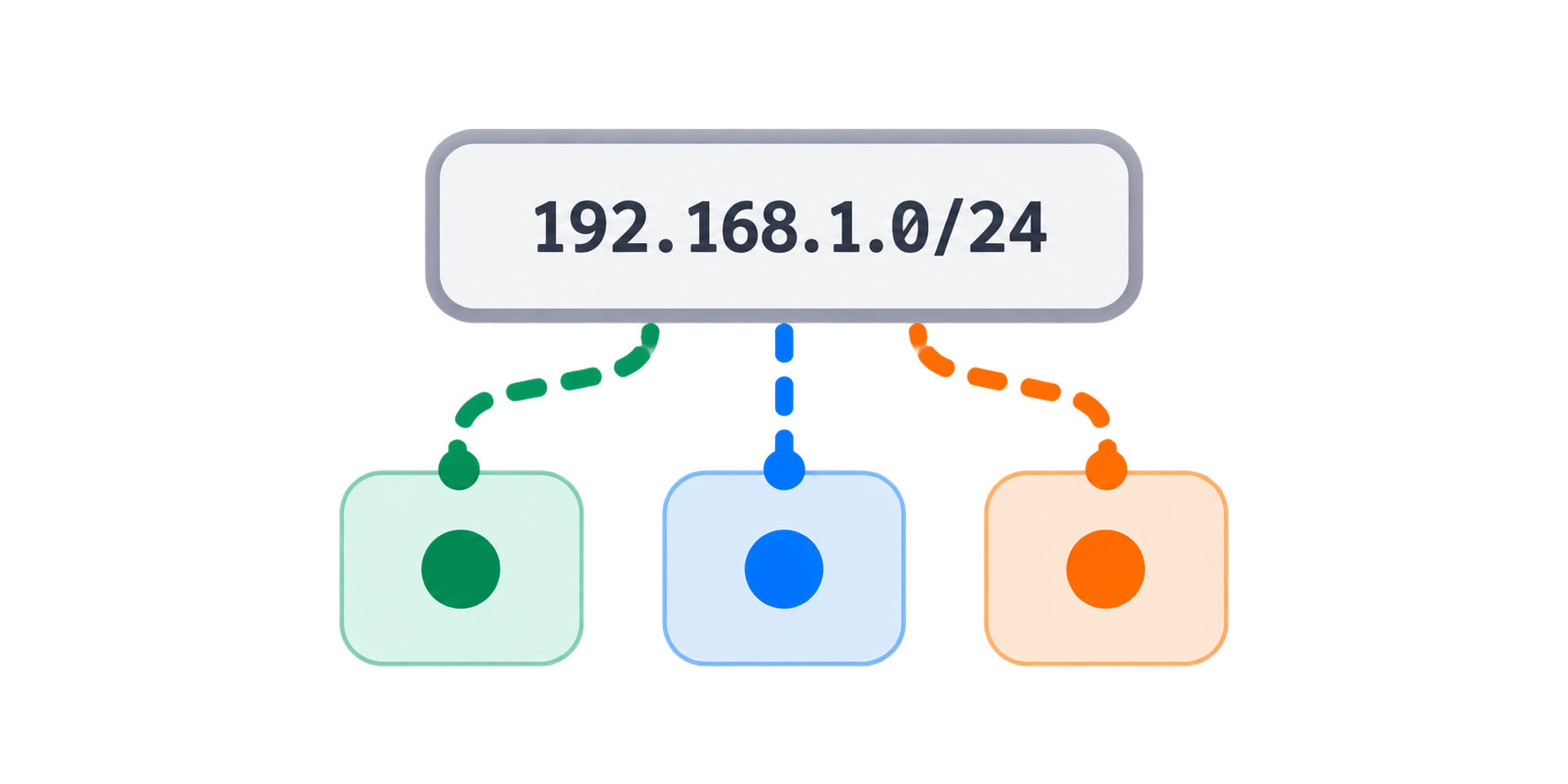
CIDR notation writes an address and prefix length, such as 192.168.1.0/24. The /24 means the first 24 bits are the network, corresponding to subnet mask 255.255.255.0.
How do I calculate usable hosts?
For conventional IPv4 prefixes /0 through /30, usable hosts equal 2 to the power of host bits, minus 2 (for network and broadcast addresses). A /24 has 8 host bits, yielding 256 total addresses and 254 usable hosts.
What is the difference between /30 and /31?
A /30 has 4 addresses and 2 usable hosts. A /31 also has 2 addresses but per RFC 3021, both function as hosts on point-to-point links, making it an exception to the standard rule.
Which value should I use in a static route?
Use the network address and prefix, such as 192.168.1.0/24. The usable range is for host assignment; the broadcast address is neither a next hop nor an assignable host.
Tech stack & tags
Feedback & Discussion
Discussion
Sign in to leave a comment or rating.
No comments yet. Be the first.
More Developer Tools tools
Web infrastructure for AI agents to navigate, authenticate, and automate web workflows at scale.

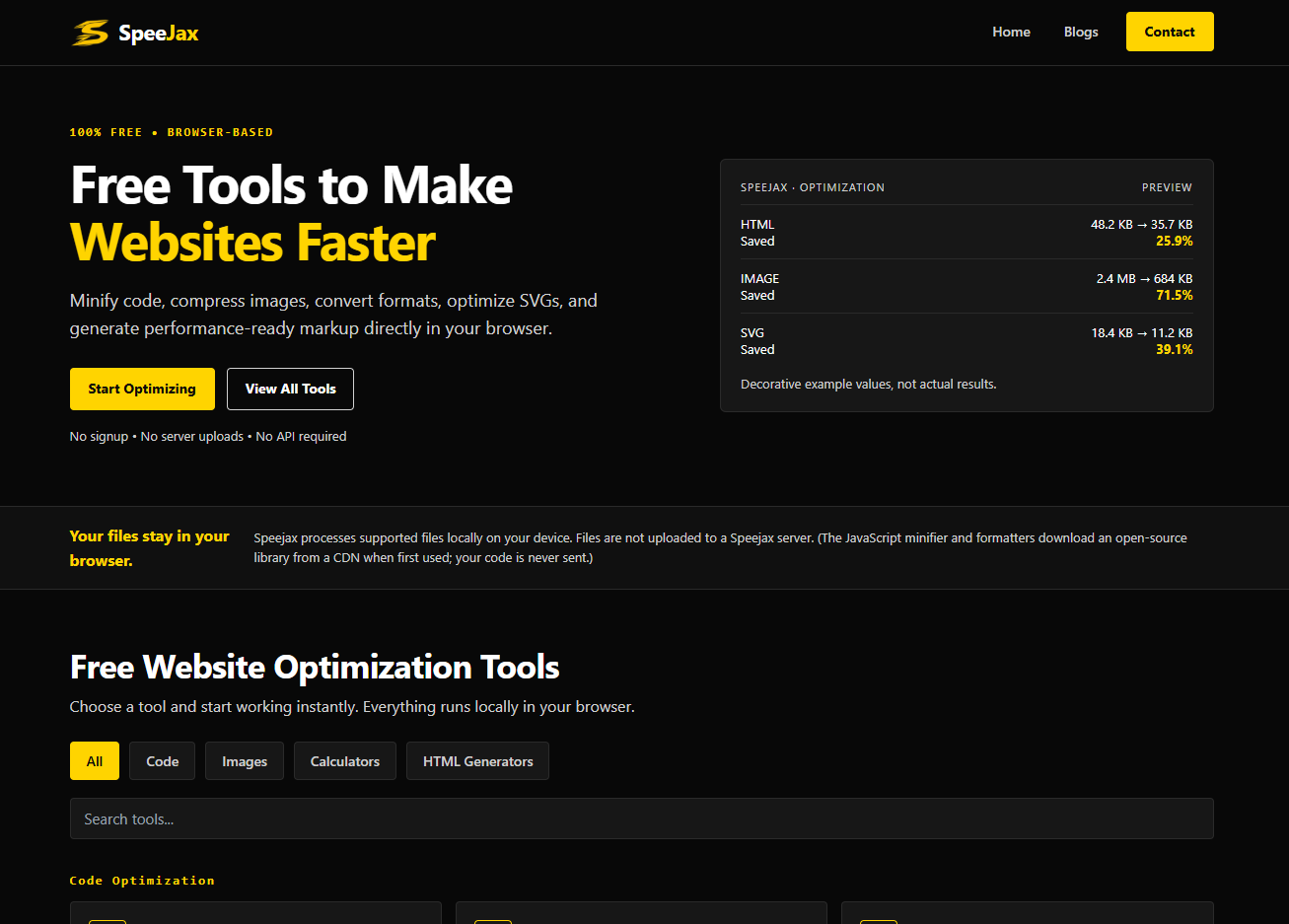
Free browser-based tools to minify code, compress images, and optimize websites for speed.
Hosted AI agents and browser infrastructure for web automation

Free browser-based HTML, CSS and JavaScript tools for formatting, minifying, validating, analyzing, generating and testing code.